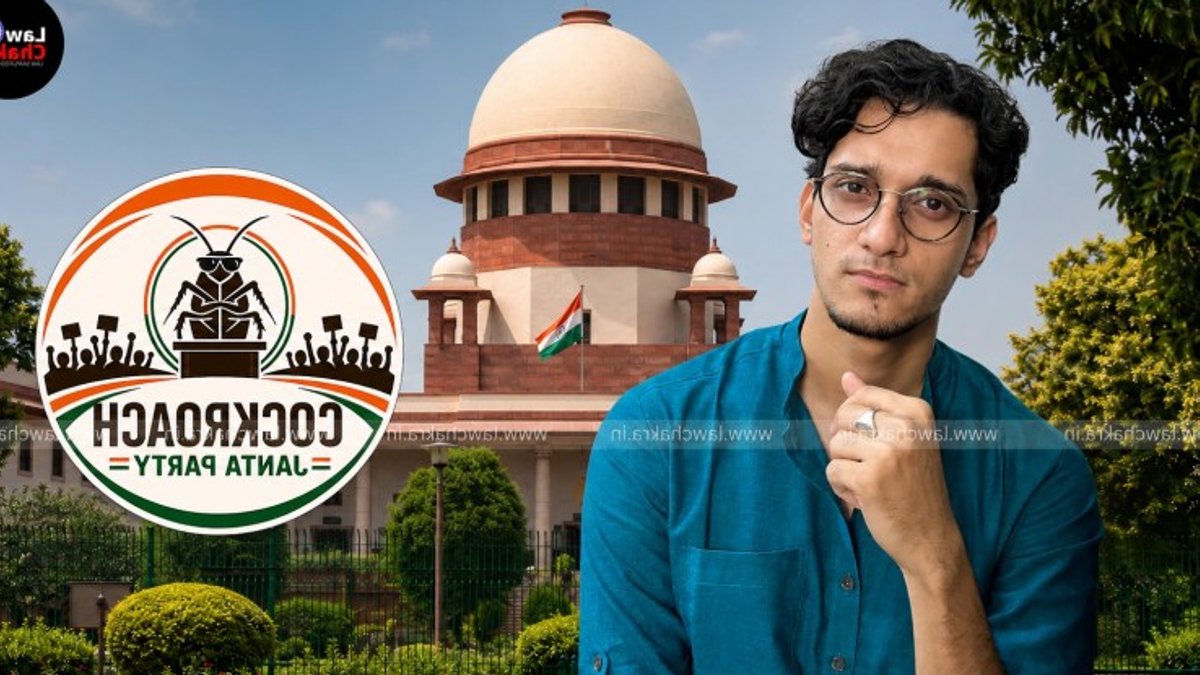
The Cockroach Janata Party (CJP) canceled its planned September 5 march in Delhi after the Supreme Court dismissed the first information reports filed against student protesters. The court called the decision significant. The announcement came in open court on Tuesday, ending a weeks-long standoff that began with a July demonstration near Parliament.
Saurav Das, the CJP’s co-convener, told the court the party was withdrawing the protest following the government’s assurances, which now carried judicial authority. “In view of the positive assurances given by the Government of India, the judicial sanctity now attached to those assurances, and the order being passed by this Court, the CJP considers it appropriate to withdraw its call for the September 5 march,” he said.
Court’s order removes the protest’s core demand
The Supreme Court used Article 142 to dismiss the FIRs, addressing the students’ main complaint. The bench, led by Chief Justice of India Surya Kant and Justices Joymalya Bagchi and V. Mohana, had earlier refused to block the march, stating that law and order fell under police jurisdiction. The government later requested the cases be dropped, and the court’s Tuesday ruling eliminated the legal grounds for the protest.
Das expressed gratitude to the court, along with Advocate Vrinda Grover and Solicitor General Tushar Mehta. “Sir, I just want to thank the Court for what it has done today. It is historic,” he said. The Chief Justice acknowledged the protesters’ role, while Mehta noted both sides had acted cooperatively. “We were not adversaries,” he added.
The government’s assurances, now formally endorsed, hold more weight than informal political promises. The court’s order explicitly linked its decision to both parties upholding the agreement, creating a rare case where a protest ended not because it was banned, but because its demands were met through a court-supervised resolution.
From confrontation to resolution—at least for now
The CJP had organized the September 5 march to challenge what it described as the government’s refusal to drop charges against students arrested during July demonstrations over the NEET paper leak. Those protests had ended with a march toward Parliament on July 20, followed by accusations of police overreach. A court-appointed committee is still investigating those claims.
Related: Navigating India’s Common Civil Disputes with Lawyers
The court had previously declined to intervene, arguing it couldn’t assume the march would lead to unrest. The government’s later request to dismiss the FIRs under Article 142 altered the situation, removing the legal basis for the demonstration.
The outcome marks a move toward resolution, though not a full one. While the court’s order settles the immediate dispute over the FIRs, broader concerns remain. These include the alleged police misconduct and the right to protest. The committee continues its work, and the Chief Justice framed the moment as a starting point. “We would prefer that the students now focus on their academics and on building their careers,” he said. “In a competitive world, creating a place for oneself is difficult.”
He encouraged both sides to address remaining issues through discussion, telling the students—who had spent weeks in agitation—that “hardly any issue is so complicated that it cannot be resolved through open-minded conversation.” The remarks aimed to shift the conflict from a standoff to a negotiation.
The march’s cancellation closes one chapter, but accountability proceedings tied to the July protests continue. For now, the students secured a legal win, though the debate over protest rights and police conduct persists.
Das later told reporters the party would watch the government’s compliance with the order. “We now look forward to compliance with today’s order,” he said, leaving room for future action if the assurances aren’t honored.




Leave a Reply