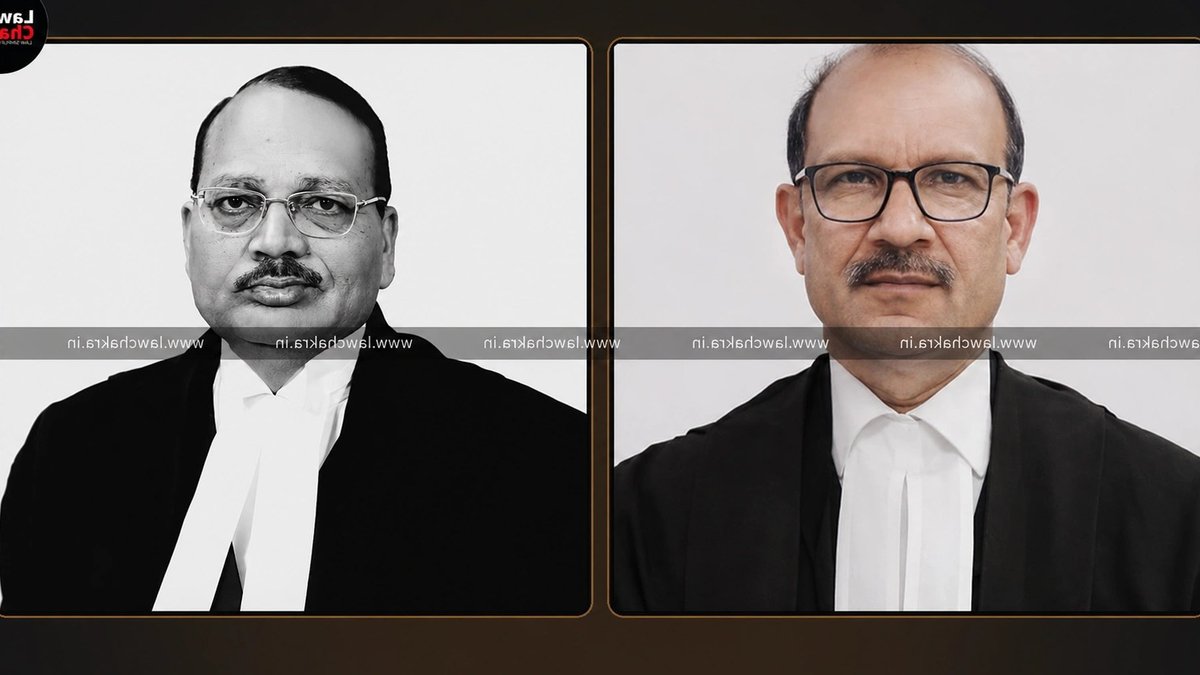
Chief Justice of India Surya Kant said the concerns raised by Justice Sandeep Mehta against the acting chief justice of the Rajasthan High Court are being examined through the established institutional process, and that the allegations cannot be treated as proven.
Allegations and Institutional Review
The matter surfaced after three letters from Mehta were reported in the press. The letters asked the collegium to transfer the acting chief justice, Justice Sanjeev Prakash Sharma, citing alleged manipulation of case listings and misuse of administrative powers.
The issue has drawn national attention.
In a Wednesday‑evening press statement, Surya Kant emphasized that the contents of the letters cannot be adjudicated in the public domain. He said the judge concerned must be given a fair chance to respond before any conclusion is reached.
Related: Ajeet Bharti seeks anticipatory bail in SC/ST case
“The fact that allegations have been made, therefore, cannot by itself be treated as a finding against the judge,” the statement read. The chief justice stressed the principle of natural justice, noting that reputational stakes are high and the claims remain untested.
Collegium’s Role and Next Steps
The collegium, which includes the chief justice and senior Supreme Court judges, is already handling appointments of chief justices in other high courts. According to the report, the concerns raised by Mehta have been noted and are being examined at the appropriate level.
The process will consider both the material placed on record by Mehta and the response from Sharma. Any decision on continuation, transfer, or other administrative action will be taken by the competent authority after due consideration.
“The Supreme Court cannot allow individual complaints concerning judges to be determined through competing claims in the media,” the chief justice added, warning against public litigation of such disputes.
Related: Why Litigation’s Operational Side Matters
That remark reflects a broader effort to keep internal judicial disagreements within the institutional framework rather than letting them play out in the press.
While the letters have entered the public domain, Surya Kant’s statement seeks to pull the controversy back into the collegium’s fold. The institution’s settled procedure, rather than public debate, will guide the outcome.
More details about the Supreme Court’s collegium system can be found on the Wikipedia page.





Leave a Reply