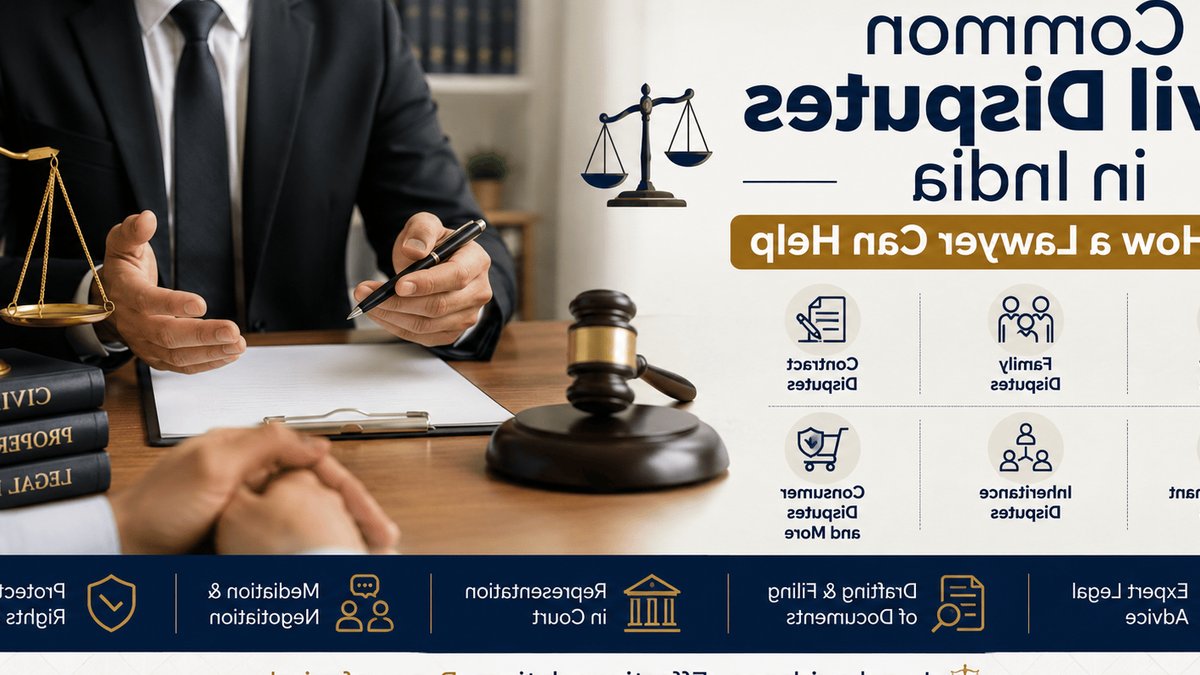
Understanding the most common civil disputes in India helps people avoid costly delays and choose the right legal path early.
Frequent Categories of Private Conflict
Property disagreements top the list, ranging from boundary clashes between neighbours to inheritance fights that involve family members. The Transfer of Property Act, 1882 and the Registration Act, 1908 typically apply.
Contract issues follow closely. When a vendor does not deliver goods as promised or a client refuses payment for finished work, parties turn to the Indian Contract Act, 1872 for remedies such as damages or specific performance.
Family matters, including divorce, child‑custody battles, and succession disputes, fall under personal statutes like the Hindu Marriage Act, 1955 or the Special Marriage Act, 1954. These cases often need a delicate mix of legal skill and sensitivity.
Faulty products, misleading advertisements, and substandard services are addressed under the Consumer Protection Act, 2019.
Rental disagreements appear regularly in cities where demand outpaces supply. Issues such as unpaid rent, security‑deposit disputes, or unauthorised subletting are governed by state rent‑control laws.
Employment and debt recovery disputes also feature prominently. Wrongful termination or unpaid wages invoke the Industrial Disputes Act, 1947, while bounced cheques trigger provisions of the Negotiable Instruments Act, 1881.
Role of Legal Professionals in Resolving Conflicts
Before a case reaches a courtroom, an attorney typically conducts a case assessment to gauge the strength of the claim and possible outcomes.
Document review is next. The professional checks contracts, title deeds, or loan agreements for gaps that could undermine a claim.
Related: Ex Cop Seeks Court Intervention in March
Drafting a legal notice often settles matters without further action. A well‑crafted notice signals seriousness and can prompt settlement.
Negotiation and mediation provide alternatives to lengthy litigation. In many instances, parties reach a binding agreement within weeks rather than years.
If the dispute proceeds to court, the counsel files the petition in the civil court, tribunal, or commission and represents the client throughout the hearing.
After a judgment, the attorney ensures enforcement, whether that means recovering money, securing possession of property, or supervising compliance.
Early legal advice can also prevent disputes from forming. By clarifying contract terms and confirming documentation, parties reduce the chance of misunderstanding later.
One slightly awkward phrase: the paperwork was, oddly enough, missing a signature, which forced the parties back to the negotiation table.
Common Pitfalls to Avoid
- Relying on verbal agreements without written proof.
- Overlooking limitation periods set by the Limitation Act, 1963.
- Skipping the legal notice stage, which often resolves issues early.
- Attempting to manage complex disputes without professional guidance.
Preserving evidence such as emails, receipts, and messages is essential.
Delays can allow problems to grow, making settlement harder and increasing costs.





Leave a Reply