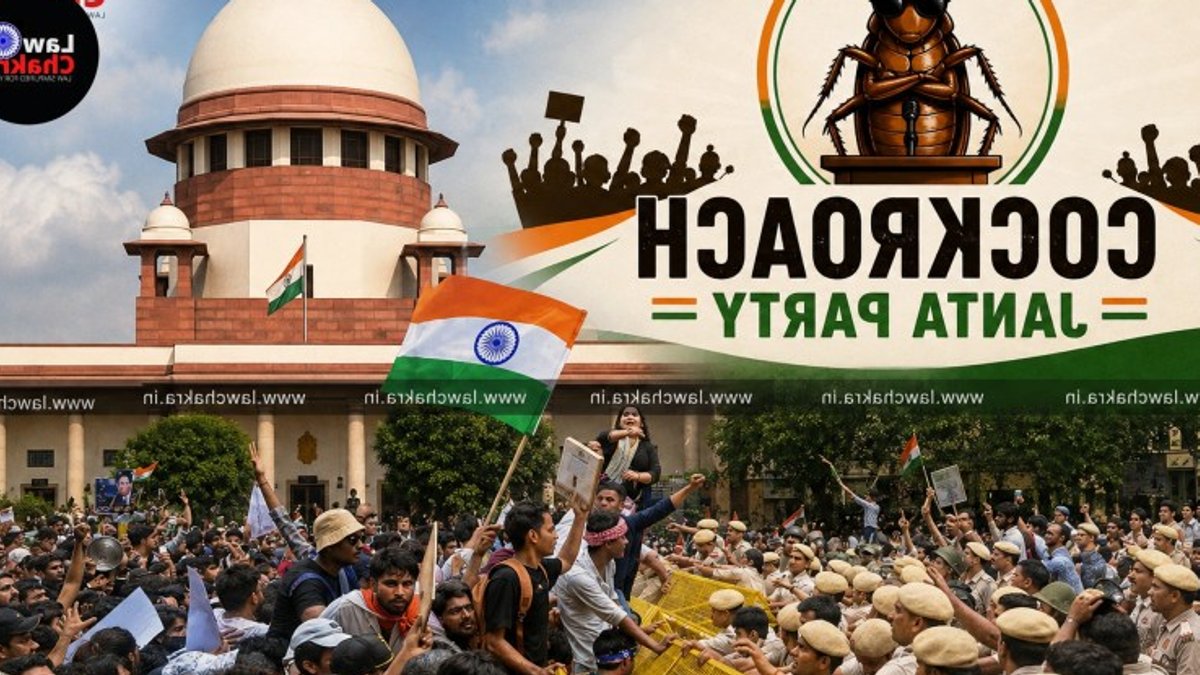
The Supreme Court has formed a five-member High-Powered Enquiry Committee to investigate alleged police excesses during recent student protests, prioritizing complaints regarding women and children. The bench, led by Chief Justice Surya Kant, appointed former Supreme Court judge Justice (Retd.) R. Subhash Reddy as the committee’s chairperson. The order comes in response to petitions filed by students and activists who allege the disproportionate use of force, including the use of pellet guns and electric batons, during demonstrations over examination paper leaks.
Justice (Retd.) Ravi Shankar Jha, former Chief Justice of the Punjab and Haryana High Court, serves as a member, joined by Justice (Retd.) Shalinder Kaur of the Delhi High Court. Rishi Kumar Shukla, former Director of the Central Bureau of Investigation, and Dr. L.R. Bishnoi, retired DGP of Meghalaya, round out the panel. The Court selected these individuals based on their expertise and diverse backgrounds.
While the committee will investigate the claims of excessive force, the Court reserved the right to decide broader constitutional questions on its own. These include issues surrounding facial-recognition surveillance and the use of blanket prohibitory orders under the Bharatiya Nagarik Suraksha Sanhita. The Court noted that these matters require “judicial nuance and circumspection” and should not be delegated entirely to the panel.
Of the many allegations, the Court singled out the alleged targeted violence and molestation of women protesters as a priority issue. The order directs the committee to investigate the chain of command that led to these incidents and to determine whether any rules or norms were breached. The panel is required to submit a “First Interim Report” on these priority issues as soon as possible.
Related: Supreme Court Weighs Disqualification of Shinde
Observers note that the focus on gendered violence during these demonstrations highlights a specific dimension of the broader civil unrest. While the immediate trigger was the exposure of question papers, the scale of the response and the specific targeting of female participants have added a layer of complexity to the legal and political fallout. The committee is tasked with balancing these competing narratives, ensuring that the grievances of both the protesters and the police are examined “on a par” with one another.
The Court has built in safeguards for complainants, allowing them to submit material and complaints anonymously. This measure aims to protect the identity of witnesses and victims of alleged abuse. To ensure a thorough investigation, the Court directed police, paramilitary forces, and investigating agencies to hand over all preserved material. This includes CCTV footage, drone footage, body-worn camera recordings, and wireless communication records related to the protests.
Analysts suggest that the operational management of large-scale civil disturbances often presents significant challenges for security forces. The specific allegations of targeting women have forced a re-evaluation of standard operating procedures in such scenarios. By establishing this panel, the judiciary is attempting to address the immediate procedural failures while signaling a concern for the broader rule of law. The operational side of litigation has become increasingly relevant as courts grapple with these systemic issues.
According to the filing, the committee’s mandate is strictly limited to the specific allegations of force and the procedural chain of command. The Court emphasized that it will not defer to the panel on the constitutional validity of the surveillance technologies used during the protests. This division of labor ensures that technical questions remain within the purview of the highest court. The panel must deliver its findings without delay, as the public demand for accountability in these matters remains extremely high.




Leave a Reply