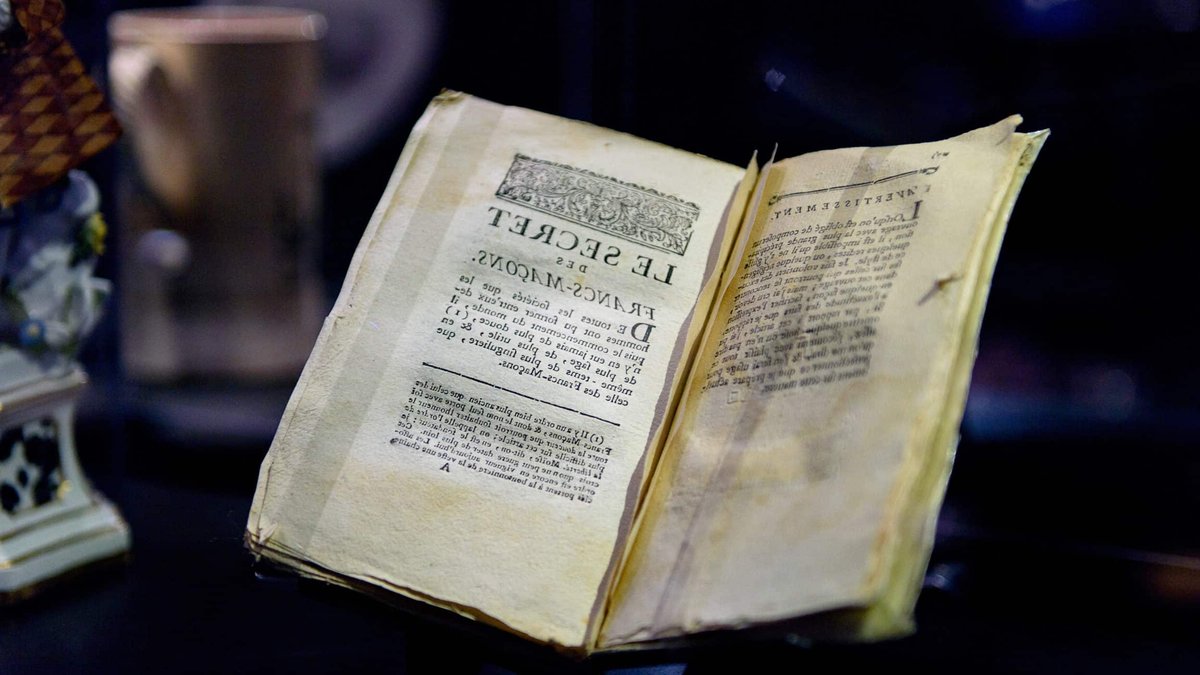
A consultative opinion from France’s Collège de déontologie des magistrats in June 2026 reignited a long-standing debate over whether judges can belong to Freemasonry. The ruling, prompted by a magistrate seeking ethical guidance before joining a lodge, concluded that membership is incompatible with judicial ethics when it creates a prior loyalty or solidarity. The decision highlighted four risk factors: the Freemason oath, described as creating allegiance or obedience; the “principle of secrecy” surrounding the association’s activities; an existing judicial scandal linked to Freemasonry; and an increased risk in small jurisdictions, with specific difficulties for a judicial head.
The opinion, published anonymously on the Cour de cassation website on 9 June 2026, focused on a tribunal president who asked whether membership would violate ethical rules. It did not rule on the legality of Freemasonry but assessed whether the specific case posed a conflict. The wording—emphasizing “all magistrates” and “serious reservations”—sparked speculation about an unofficial ban. Within weeks, twelve Freemason lodges sent a joint letter to President Emmanuel Macron and Justice Minister Gérald Darmanin on 7 September 2026, demanding the Conseil supérieur de la magistrature (CSM) review the matter. They framed the debate as an attack on associational rights, comparing it to the 1940 Vichy-era law that briefly barred Freemasons from public office.
The lodges rejected the idea that Freemasonry’s secrecy equals wrongdoing, noting confidentiality applies only to internal rituals. The Collège’s opinion, while non-binding, carries weight in disciplinary cases. French law lacks an explicit ban, but the Charter of Judicial Ethics prohibits private commitments that affect judicial functions. The CSM previously sanctioned a judge in a past scandal tied to Freemasonry, a decision upheld by the Conseil d’État.
The lodges’ legal strategy distinguishes between allégeance (legal allegiance) and solidarité fraternelle (brotherly bonds), insisting the latter does not obligate judges to favor members in cases. They cite the 1940 Vichy-era law as a warning against reviving exclusionary measures and invoke the bloc de constitutionnalité, France’s constitutional framework, to defend private association rights under Articles 4 and 10 of the Declaration of the Rights of Man and of the Citizen. The petition also criticizes the Collège for relying on a Wikipedia entry, arguing it should have consulted academic or legal sources.
Legal Framework Governing Judicial Membership in Freemasonry
The ordonnance n° 58-1270 of December 22, 1958, which governs the status of magistrates, establishes key constraints. Article 8 and 9 outline incompatibilities, while Article 10 outlines obligations of reserve and neutrality in judicial conduct. The Charte de déontologie des magistrats, adopted by the Conseil supérieur de la magistrature (CSM) after consultation with the Collège de déontologie, reinforces these rules by prohibiting private commitments that create conflicts of interest or “repercuss” on judicial functions. These provisions do not target Freemasonry specifically but apply broadly to any association whose principles or activities could undermine judicial integrity.
Separate procedural safeguards address potential conflicts in individual cases. The Code de procédure pénale (Articles 668 and following) and the Code de procédure civile (Articles 339 and following) provide mechanisms for judges to recuse themselves, request a transfer of cases (déport), or abstain when personal relationships, whether familial, social, or associative, could affect impartiality. These tools are designed to resolve situational risks without imposing blanket restrictions on group affiliations. The Collège de déontologie’s advisory role is further limited by its reliance on the facts presented in each case, without independent investigations or adversarial proceedings, rendering its opinions non-binding unless later invoked in disciplinary proceedings.



Leave a Reply