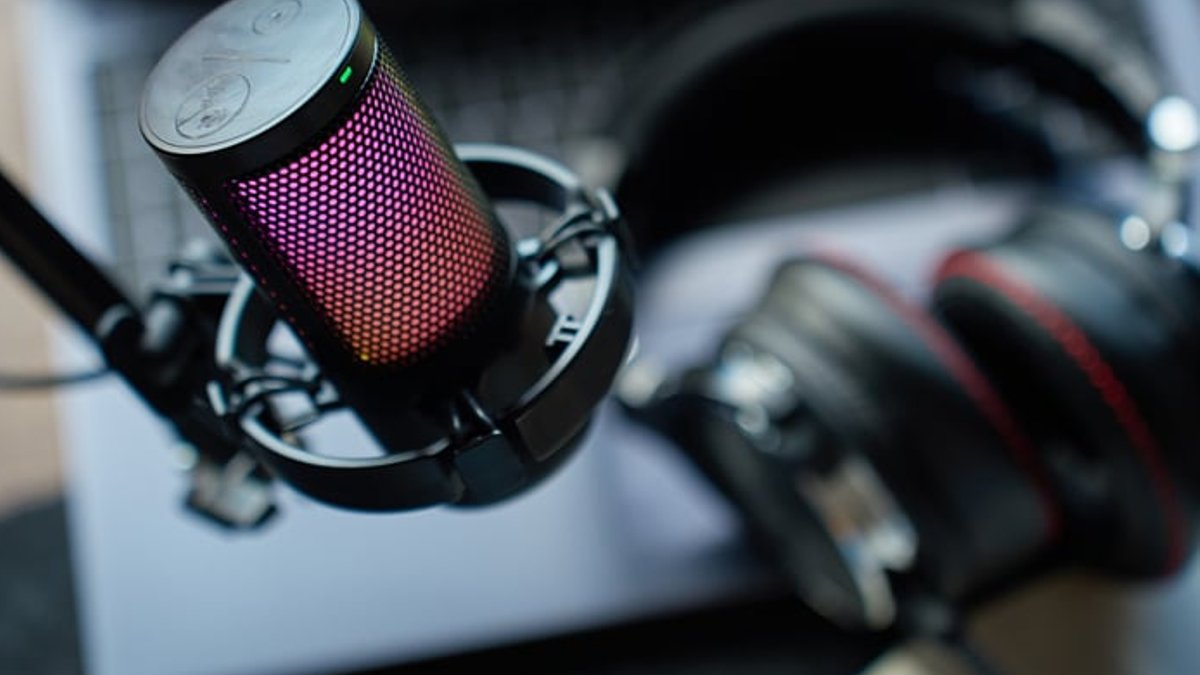
Microphone tips for lawyers can transform a standard Zoom call into a professional broadcast, helping attorneys sound like premium podcasters instead of distant participants. Sounding good online is the base requirement for anyone who wants to podcast, make a guest appearance, or command the Zoom room in meetings. Yet, most of us probably don’t know what we’re doing with our microphones. Stop apologizing for your audio. Master these microphone tips for lawyers, and you’ll sound better than 90% of people out there.
Keeping your microphone 4 to 8 inches away is the single fastest way to fix hollow, distant room audio. This proximity creates a warm, natural sound profile that built-in laptop mics simply cannot achieve. Wearing headphones eliminates the need for software filters, immediately preserving your voice’s natural warmth. Most online recording platforms use automated echo cancellation software to stop audio from leaking out of your speakers back into your microphone. However, this real-time digital processing degrades your overall voice quality. By simply wearing headphones, you eliminate the loop. You can turn off the software’s aggressive audio processing and capture pristine sound. Just watch out for bleed — if someone sitting next to you can hear your headphones, your microphone can too.
The pandemic created an immediate urgency to actually sound good online. After an initial scramble, most people bought something that technically qualified as a microphone but didn’t break the bank —flooding desks with unknown brands or the ubiquitous Blue Yeti. With all this tech sitting on your desk, starting a podcast might seem like the logical next step for your firm’s brand building. But before you hit record, take a beat. You probably don’t know what you’re doing with your microphone.
Related: AI Speeds Up Law Firms, But Is It Improving Them
The Spatial Reasoning Problem
Lawyers may have a reputation for being terrible at math, but many are equally terrible at spatial reasoning. If your microphone is so far away that it can’t be seen on your wide-angle camera shot, it is not capturing clean audio. As a general rule of thumb, keep the mic 4 to 8 inches away from your mouth. The closer you get to a mic, the more bass response it captures. Test your setup by recording short clips at varying distances until you find the sweet spot where your voice sounds rich but natural.
Positioning your microphone at a 20-degree angle to speak past it rather than into it instantly neutralizes distracting vocal pops and plosives. Hold your hand in front of your face and say, “Peter picked a peck of pickled peppers.” You will feel distinct puffs of air on your palm. In the audio world, these are called plosives — and they cause massive, distorted pops on a recording. Never put the microphone directly in front of your mouth. Point the mic at your mouth, but speak past it.
This setup problem often stems from a misunderstanding of microphone design. Many podcasters mistakenly talk directly into the top of a microphone when it was designed to be spoken into the side (or vice versa). Hint: If it’s a side-address mic, the front is usually the side with the manufacturer’s logo. If your microphone has a pattern selector switch, make sure it is set to cardioid mode — usually indicated by an upside-down, rounded heart icon. This ensures the mic principally listens to you and ignores the sound behind it (like an aging laptop fan that never shuts off).
Related: Le Pen Faces Legal Challenges
The Software Trap
Your microphone hears everything. That overhead ceiling fan, the nearby office refrigerator, the snoring dog at your feet and airplanes overhead are all competing with your voice. You don’t need to build a professional isolation booth in your office, but you do need to be mindful of your environment. Record in the quietest room available. Choose a room with “soft” features — bookshelves, a plush couch or rugs. These elements absorb sound waves and eliminate the hollow, bouncing echo effect.
The Software Trap: Don’t let your operating system bypass your good intentions. Every time you plug in a new microphone, double-check your system settings (both the Windows Sound Control Panel or Mac System Settings, as well as Zoom’s device settings). You want to make sure your computer is actually routing audio through your new hardware and hasn’t silently reverted to your terrible, tinny built-in laptop mic.
Microphones rely on amplification, known as gain. Set your gain too low, and you’re a whisper competing with what we call the “noise floor,” or the electrical noise your microphone’s components create; set it too high, and your audio will “clip” and distort. Use an online volume tool or your recording software’s meter to test your levels before a session. When speaking at your normal speaking volume, aim to average around -12dB and never hit 0dB.
Related: Labour MPs under fire over prison remarks
It is common for professionals to assume that expensive hardware alone solves audio issues, but the environment often matters more than the gear. While high-end microphones capture clear signals, they cannot fix the acoustic chaos of a room filled with hard surfaces. This is why even top-tier audio engineers spend hours treating a studio space before they ever touch a fader. The difference between a good recording and a great one is often found in the quiet corner of the room rather than the price tag of the microphone.
If you follow these steps, you will immediately sound better than 90% of the people currently producing content. You don’t need thousands of dollars of gear to get started. By applying these practical microphone tips for lawyers and pairing your setup with a competent audio engineer to clean up the files in post-production, you instantly give your firm a distinct competitive advantage.





Leave a Reply