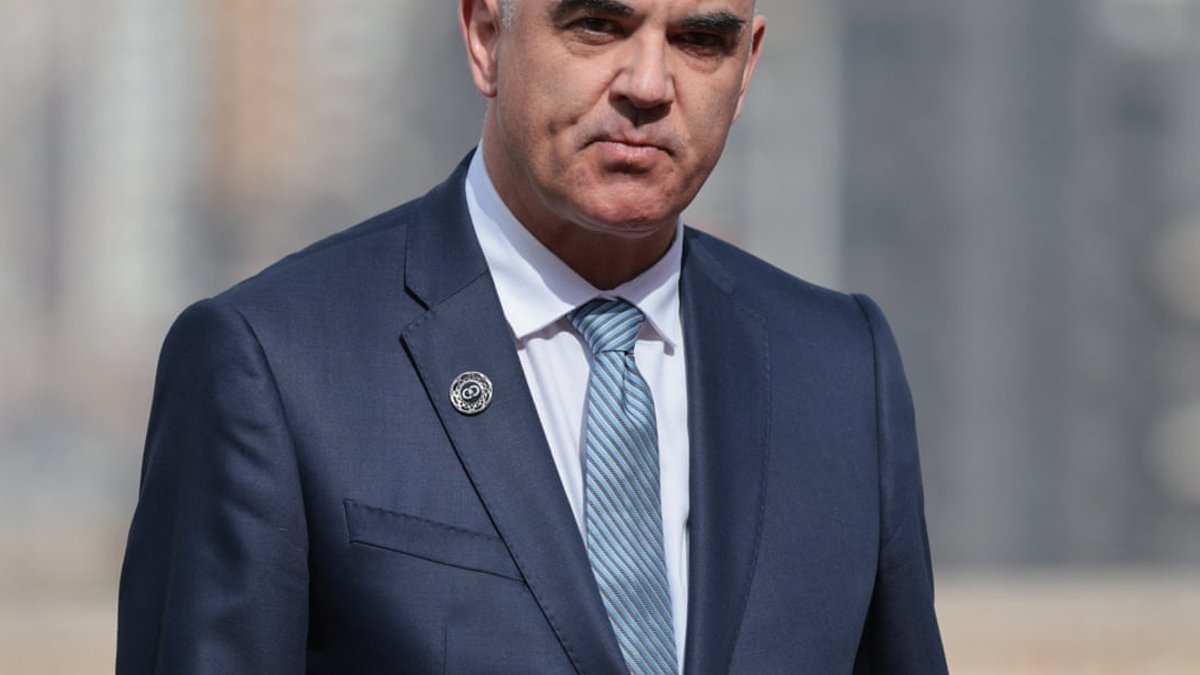
European ministers will discuss plans to send thousands of rejected asylum seekers to third-country hubs at a meeting in Moldova on Friday, according to Alain Berset, the secretary general of the Council of Europe.
The meeting will take place at a multilateral level, with ministers expected to announce a political declaration stressing countries’ rights to control their borders.
Baca Juga: Husband cleared of killing his wife
Shabana Mahmood, the UK’s home secretary, has demanded changes to the interpretation of the European Convention on Human Rights (ECHR), which has impeded the removal of foreign criminals and unwanted asylum seekers.
The planned moves have alarmed human rights organisations in the UK, who argue that undermining the convention risks weakening protection for society’s most vulnerable groups.
Asylum seekers have successfully challenged Conservative government plans to remove them to the third-country hub of Rwanda using the ECHR.
The Council of Europe meeting will be attended by the British foreign secretary, Yvette Cooper, and will discuss the implementation of return hubs.
Berset said that migrants removed from European soil would still be protected by the ECHR, and that the conditions in the countries where they are sent are important.
The meeting is the first time that ministers at the Council of Europe have discussed hubs, and it comes after the rise of Reform UK in the polls.
The UK government has attempted to set up return hubs, with Keir Starmer’s government in active negotiations with several countries, but no deals have been confirmed.
The last government’s plans to send people arriving by small boats to Rwanda were cancelled after failing to send a single person to the central African country.
The EU has voted to allow the possibility of return hubs, with Denmark, Austria, Greece, Germany, and the Netherlands involved in talks with possible destinations.
Discussions have reportedly centred on 12 possible countries, including Rwanda, Ghana, Senegal, Tunisia, Libya, Mauritania, Egypt, Uganda, Uzbekistan, Armenia, Montenegro, and Ethiopia.
Tensions around the ECHR intensified last year after a group of nine European countries, including Italy and Denmark, issued an open letter calling for greater national control over migration policies.
This week’s political declaration is expected to curb the ways that asylum seekers can use articles 3 and 8 of the convention to resist attempts of removal.
Berset said that discussions about the declaration, which will not be legally binding, would continue between the member countries.
Reform, led by Nigel Farage, and the Conservatives, led by Kemi Badenoch, have said they will withdraw from the convention if elected to government.
According to Eurostat, the EU’s statistical office, over the seven years to 2023, between 450,000 and 500,000 third-country nationals were ordered to leave the EU each year, but fewer than half did so.
Imran Hussain, director of external affairs at the Refugee Council, said that proposals to send people to detention centres in other countries risk being hugely expensive and unlikely to fix the deeper problems in the system.
In room 304 of the Moldovan capital’s conference centre, ministers will gather to discuss the plans, which have been met with criticism from human rights organisations.
The meeting will start at 9:00 AM on Friday and is expected to last several hours, with ministers discussing the implementation of return hubs and the political declaration.
In a deliberate effort to address the concerns of human rights organisations, Berset has stressed the importance of protecting migrants’ rights, even if they are sent to third-country hubs.
Concerns over the effectiveness of return hubs
Hussain argued that supporting voluntary returns is more cost-effective and avoids lengthy detention, allowing resources to be focused on speeding up decisions and supporting local communities under pressure.
The use of return hubs has been met with skepticism by some, who argue that it is unlikely to fix the deeper problems in the system and may even create new ones.
Despite these concerns, the Council of Europe is pushing forward with the plans, which are expected to be implemented in the coming months.
As the meeting in Moldova comes to a close, it remains to be seen how the plans will be received by the public and whether they will be effective in addressing the issue of asylum seekers in Europe.
In the meantime, human rights organisations will continue to monitor the situation closely, ensuring that the rights of migrants are protected and that the plans do not undermine the European Convention on Human Rights.





Leave a Reply